When you talk about African Vanilla beans, majorly two countries come into mind and these are Uganda and Madagascar. Uganda is the second exporter (exports 600 metric tons annually) of vanilla in the world after Madagascar that produces almost 56% of world’s vanilla consumption. Madagascar supplies over half of the global market. Although not large scale vanilla growers, other African countries that cultivate vanilla include Comoros, Tanzania and Réunion. They grow the same highly sought-after vanilla planifolia species (often classified as Bourbon vanilla) but produces beans with diverse flavor profile.
African Vanilla Producing Regions
Comoros
Located in the Indian Ocean, this island nation is a noticeable producer of high-quality Bourbon vanilla.
Tanzania
Growing Vanilla planifolia, Tanzania produces world-class beans that feature a completely distinct and robust personality compared to Uganda.
Réunion
Previously known as Île Bourbon, this French overseas department is the birthplace of the manual hand-pollination technique and still cultivates premium, genuine Bourbon vanilla.
Uganda Vanilla Beans (V. planifolia)
Flavor Profile
Bold and intense with unique earthy, milk chocolate and fig notes. Grown in nutrient-rich volcanic soil, these beans have a higher than average vanillin content.
Best Use
Chocolate-based recipes, savory dishes, bold desserts and premium confectionery products.
Appearance
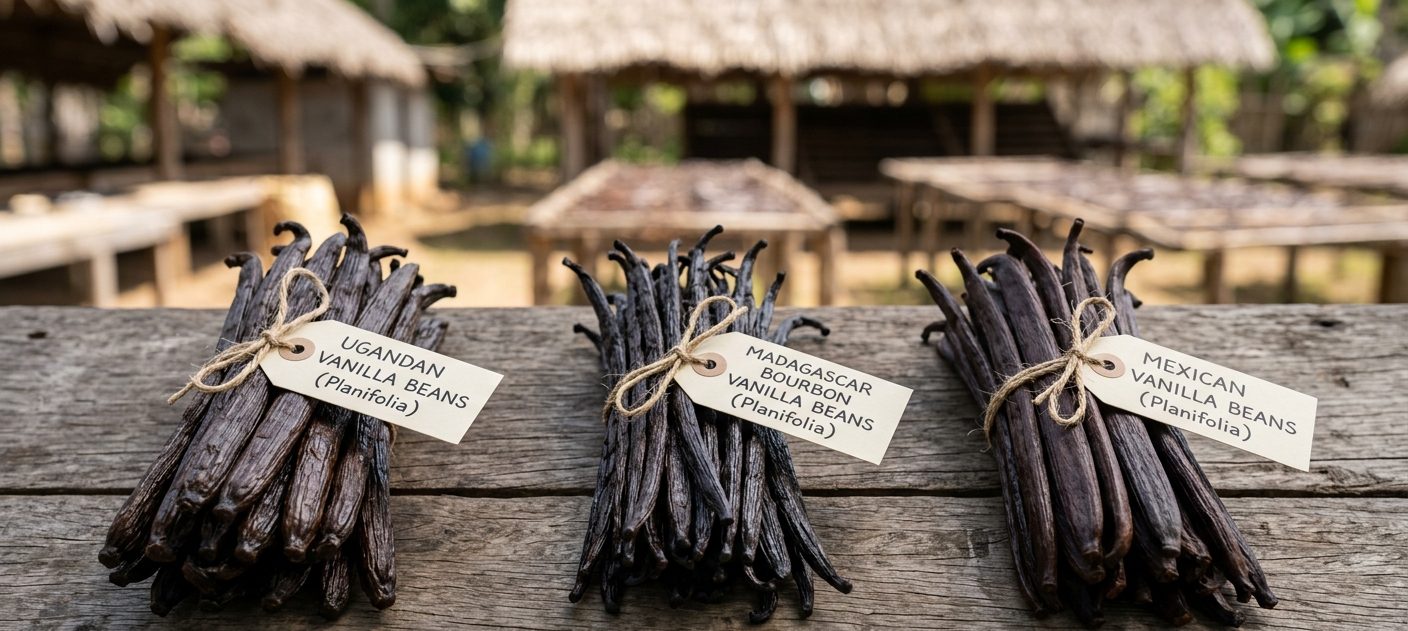
Often longer and thinner than Madagascar beans.
Ugandan Vanilla in Detail
Ugandan vanilla is a high-quality, sustainably produced product. As of 2026, Uganda stands out globally due to its two annual harvests, which allow for consistent, year-round supply of fresh beans.
- Two Annual Harvests: Uganda uniquely has two distinct annual vanilla harvest seasons, generally occurring in June–July (Season A) and December–January (Season B).
- Consistency: The dual-season system provides reliable year-round supply for export markets.
- Versatility: Ideal for rich desserts, chocolate production and savory dishes due to its deep aromatic character.
- Pure Vanilla: Ugandan vanilla is 100% natural with no additives. It is vegan-friendly, non-GMO and sustainably sourced.
Madagascar (Bourbon) Vanilla Beans
Madagascar vanilla beans are often known as Bourbon vanilla and are considered the gold standard for baking and extracts. Known for their high vanillin content, they deliver a rich, creamy and classic flavor profile.
Key Characteristics
- Vanillin Content: High naturally occurring levels ranging from 2.0% to 2.5%.
- Flavor Profile: Sweet, creamy and buttery with a rich classic vanilla aroma.
- Best Use: Baking, ice cream, custards and general-purpose applications.
- Appearance: Medium-length, dark and plump beans.
Types & Grades
Grade A (Gourmet)
Plump, oily and pliable with 30–35% moisture. Best for baking, scraping seeds and premium desserts.
Grade B (Extraction Grade)
Less moist, drier and occasionally split. Packed with maximum flavor per ounce, making them ideal for homemade vanilla extract.
"Choosing the right vanilla starts with knowing where it's from — origin shapes every nuance of flavour, aroma, and application."
— Essence of Africa Sourcing Guide, 2026Mexican Vanilla
Authentic Mexican vanilla beans are the original source of vanilla, prized for their rich, creamy flavor profile with subtle woody, spicy and smoky notes. Sourced primarily from the Veracruz region, they are perfect for enhancing baked goods, custards, ice cream and homemade vanilla extract.
Profile & Characteristics
- Variety: Vanilla planifolia
- Flavor Profile: Creamy and sweet with deep warm notes reminiscent of clove, nutmeg and delicate smokiness.
- Appearance: Dark, oily exterior with a soft, pliable pod containing thousands of tiny, flavorful seeds.
- Curing Method: Traditionally sun-dried and cured over several months, resulting in highly concentrated flavor.
Shopping & Authenticity Tips
In tourist markets across Mexico, inexpensive "vanilla" is often cut with coumarin (derived from Tonka beans), which is banned by health organizations. Always buy from reputable suppliers to ensure you are getting genuine Vanilla planifolia.
Final Comparison
While Madagascar vanilla remains the global benchmark for baking and classic vanilla flavor, Ugandan vanilla stands out for its bold aroma, high vanillin content, dual annual harvests and exceptional versatility in chocolate and savory applications. Mexican vanilla, the original vanilla of the world, offers a unique spicy and smoky complexity that appeals to gourmet chefs and artisan food producers.
Choosing between African and Mexican vanilla ultimately depends on your intended application and flavor preference. For rich and intense flavor, Ugandan vanilla excels. For traditional baking, Madagascar remains a favorite. For warm, spicy complexity, authentic Mexican vanilla is unmatched.
- Uganda and Madagascar together dominate global vanilla supply, with Madagascar producing over 56% of world consumption.
- Ugandan vanilla achieves above-average vanillin content (3%+) thanks to volcanic soils, equatorial altitude, and two annual harvests.
- Madagascar Bourbon vanilla is the classic global standard — sweet, creamy, and ideal for baking and extracts.
- Mexican vanilla is the original source of vanilla, distinguished by warm woody, spicy, and lightly smoky notes.
- Always buy from reputable suppliers; counterfeit Mexican vanilla cut with coumarin is common in tourist markets.